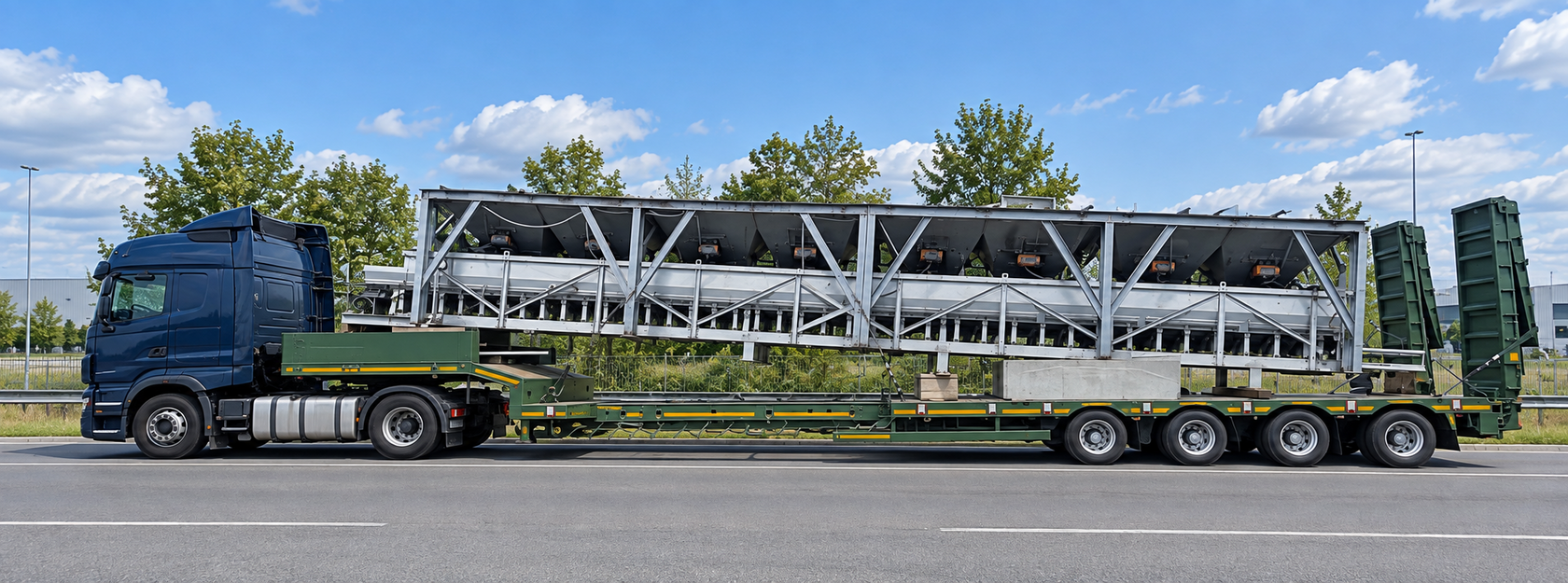
01
Trusses and spatial structures
Large elements of considerable length with limited safe support zones.
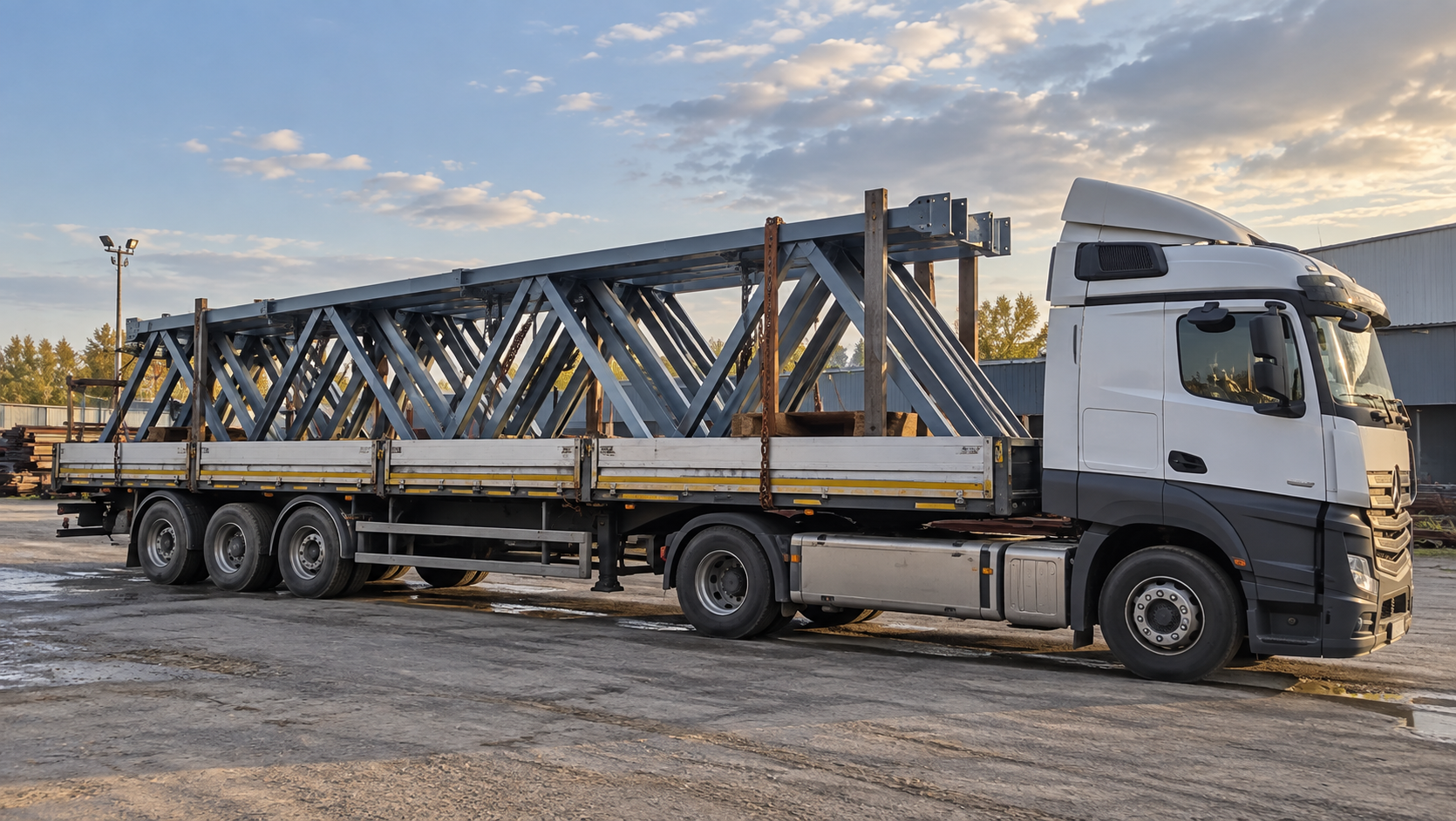
Trusses, beams, frame structures, large welded sections and other long structural elements. We select the transport configuration based on length, support points, protruding parts, structural rigidity and route geometry.
For trusses, frames and large welded sections, it is important to understand where the structure can be supported, how it responds to transport loads and what overhang is permissible.
Incorrect positioning on the platform can create excessive stress in the structure itself or make it impossible to negotiate turns and narrow sections.
Length, height, width and spatial form determine the platform, support arrangement and securing method.
Large elements of considerable length with limited safe support zones.
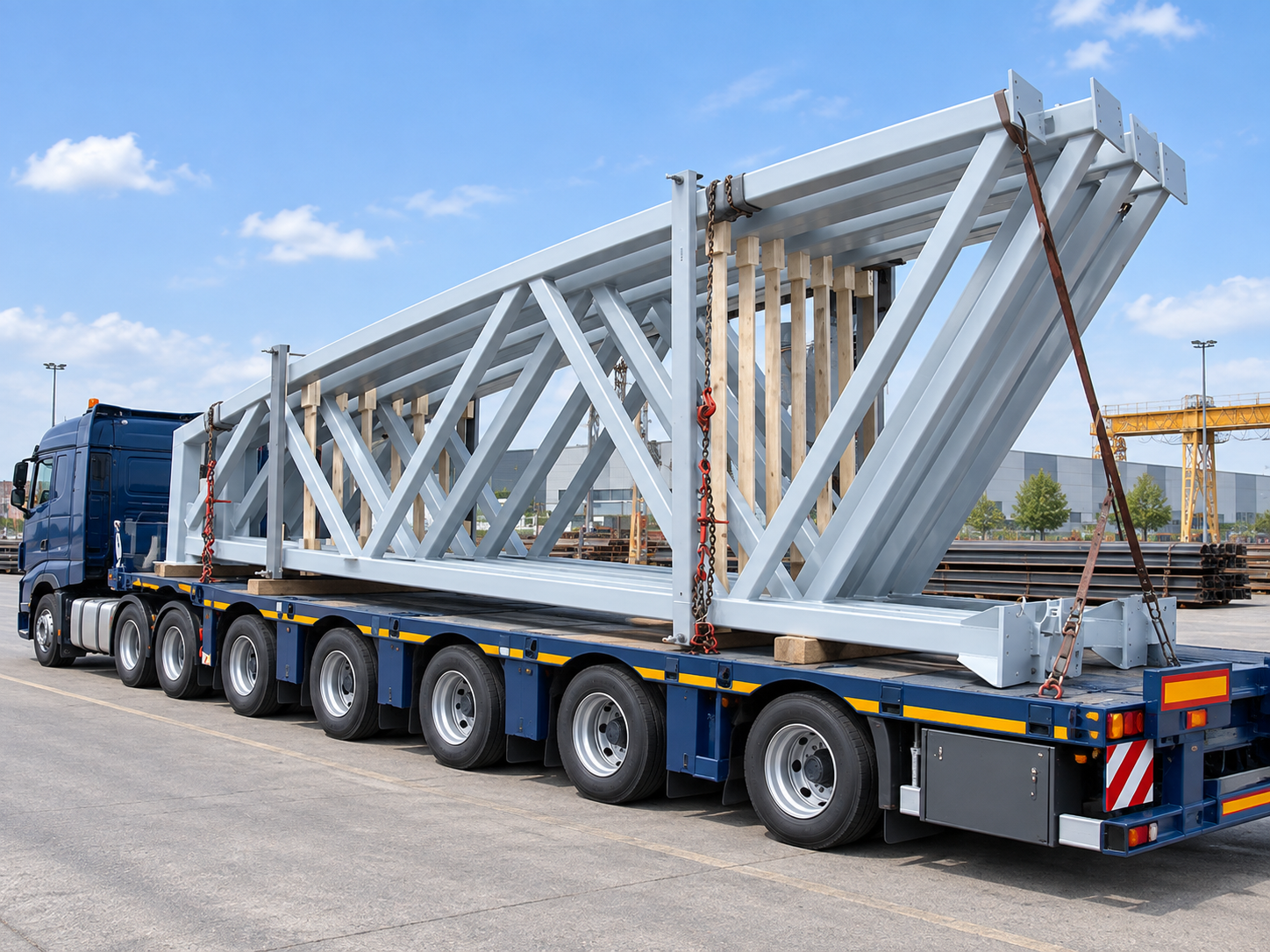
Elements where the overall vehicle combination length and turning radii are critical.
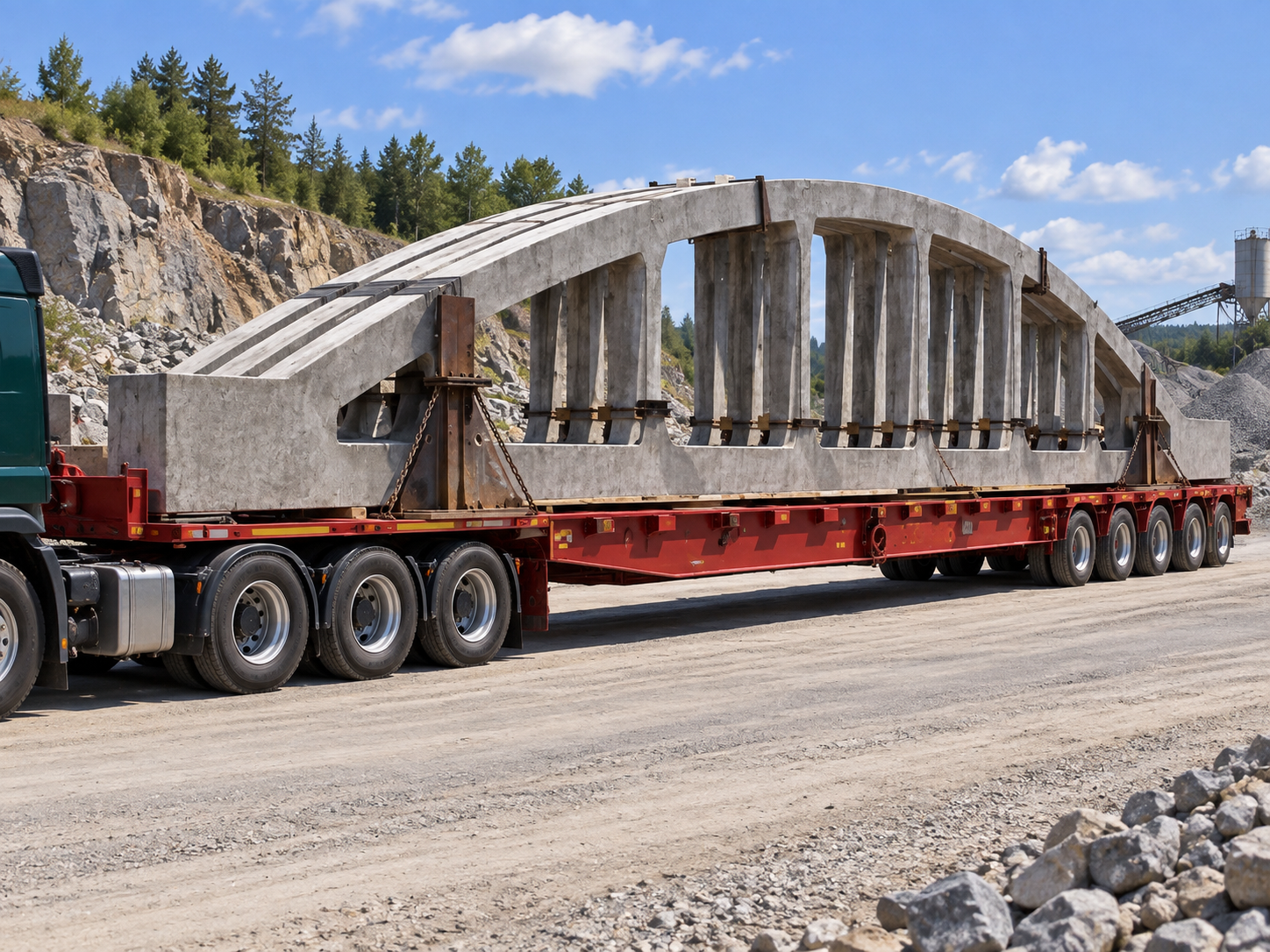
Non-standard sections, frames and prefabricated assemblies.
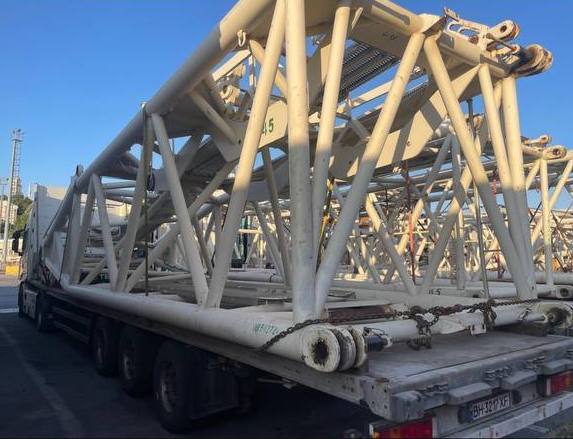
For long and spatial structures, supports must be positioned where the structure is actually designed to withstand loads during transport.
For a large truss or section, it is not enough simply to select transport based on load capacity. The usable platform length, support positions and rear overhang directly affect the manoeuvrability of the entire vehicle combination.
Matched to the actual support zones of the structure.
Selected according to weight and the required load distribution.
Checked in relation to the tractor unit, turns and infrastructure.
The structure itself, supports and platform height are taken into account.
The securing arrangement is selected based on cargo shape, available securing points and the risk of local loads. For steel structures, it is especially important not to damage the protective coating and frame elements.
The longer the structure and vehicle combination, the more critical intersections, U-turns, site entrances and sections with restricted geometry become.
The trajectory of the tractor unit, platform and rear overhang is checked.
Fences, signs, trees and infrastructure along the road edges.
Bridges, overpasses and lines above the carriageway.
Gates, internal roads and space for vehicle positioning.
When transporting a long truss or section, it is important to consider not only the cargo dimensions, but also the platform trajectory relative to the tractor unit when turning.
The transport configuration and route are therefore considered as one system: platform length, support points, overhangs and actual road geometry.
Different types of trusses, frames and long sections require different positioning and securing arrangements.
For an initial assessment, the main dimensions, weight and information about the structure are sufficient.
Send us the weight, dimensions, support arrangement and route. If some data is not yet known, we can start with the information available.
