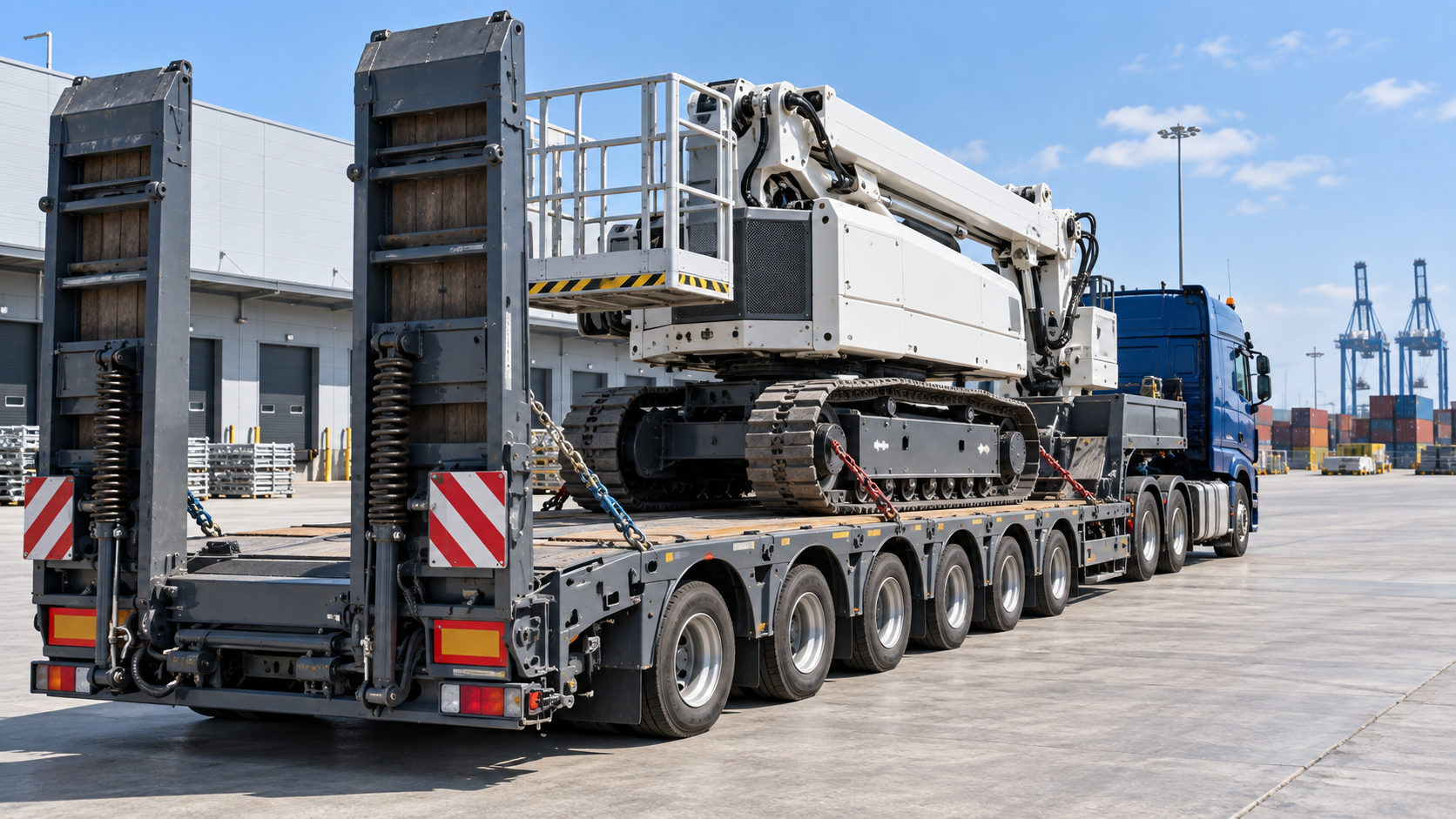
01
Tracked machinery
Excavators, bulldozers, drilling rigs and other tracked machinery.
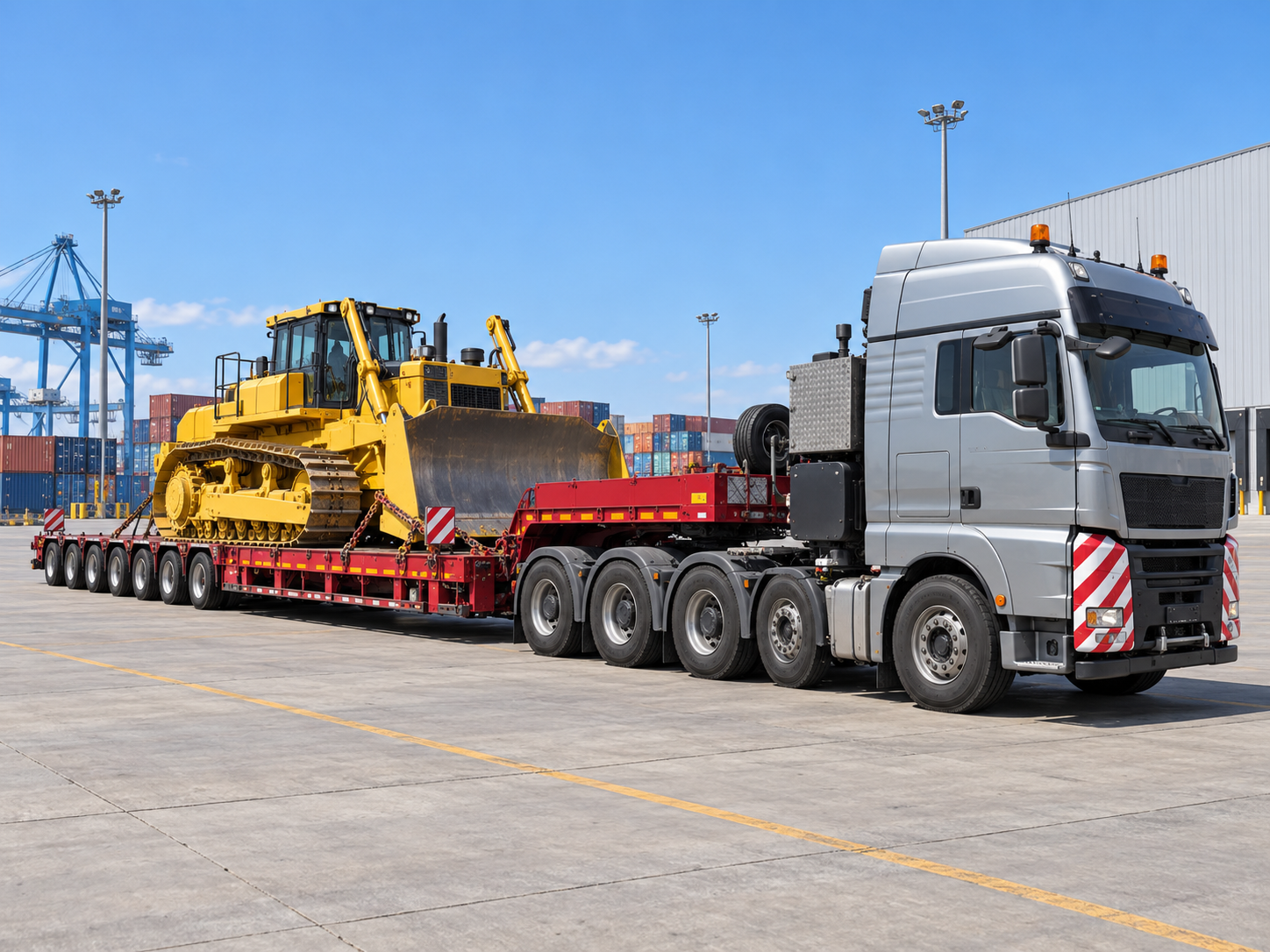
Excavators, loaders, bulldozers, quarry, road and special-purpose machinery. We select the transport configuration based on the machine's actual dimensions, weight, centre of gravity and route.
For special equipment, weight is not the only factor. The choice of transport is also affected by height, width, length, ground clearance, centre of gravity and the geometry of the machine itself.
An excavator, loader or drilling rig may have the same weight but require completely different platforms, loading configurations and routes.
The platform configuration and loading method are determined by the design of the specific machine.
Excavators, bulldozers, drilling rigs and other tracked machinery.
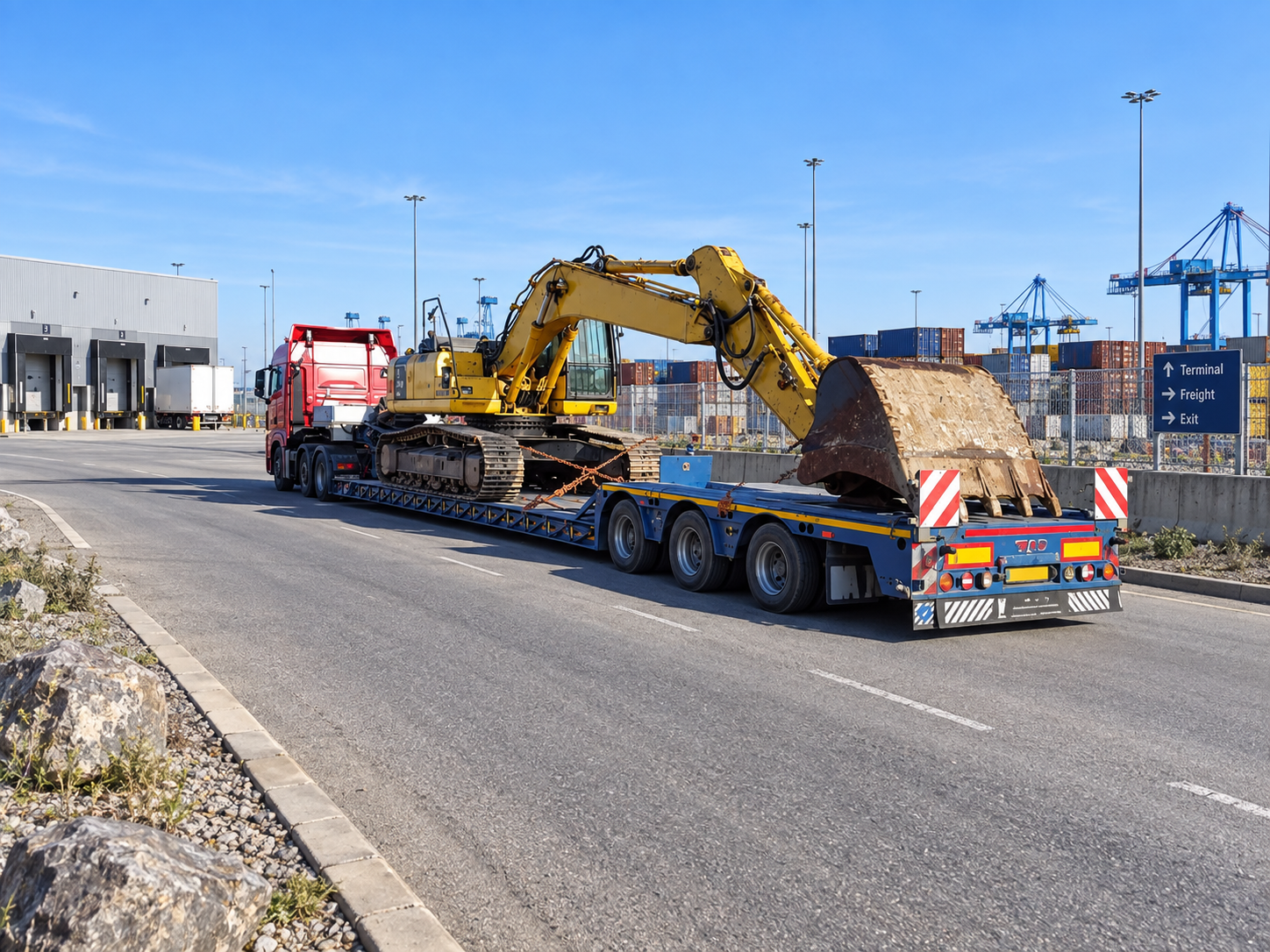
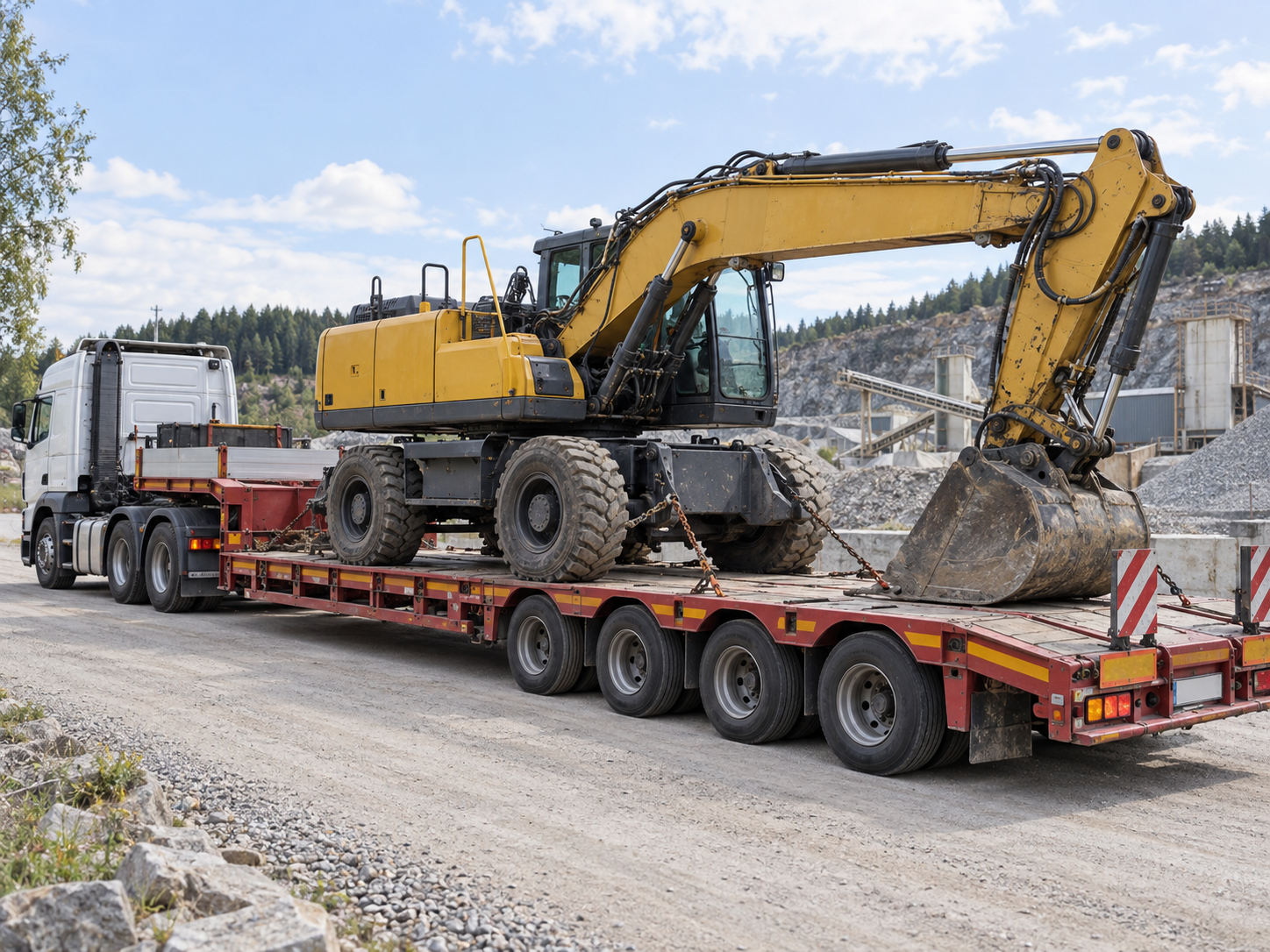
Wheeled and tracked machines, taking into account the boom, bucket, transport height and width.
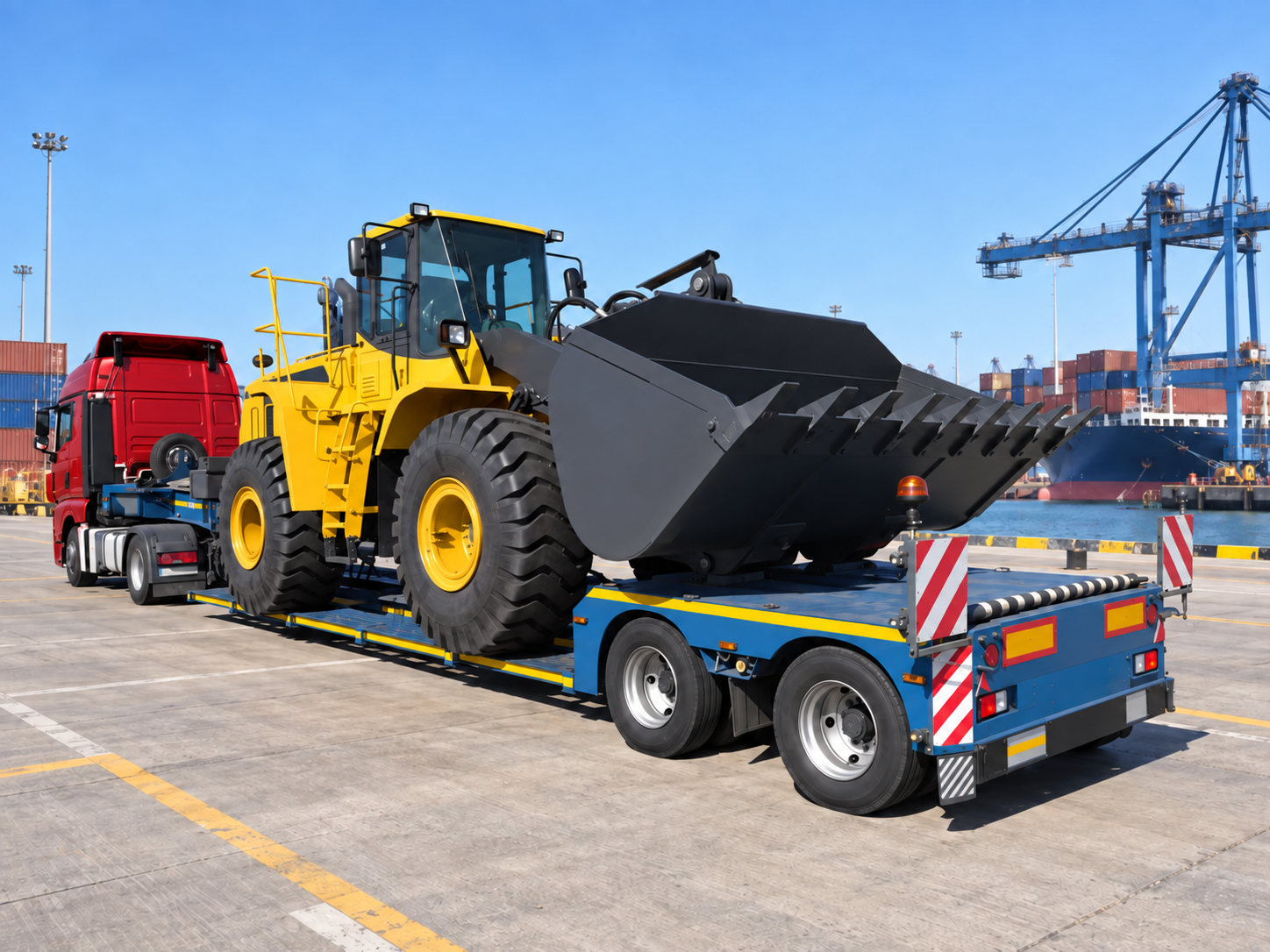
Machinery with large wheels and attachments that affect the overall transport length.
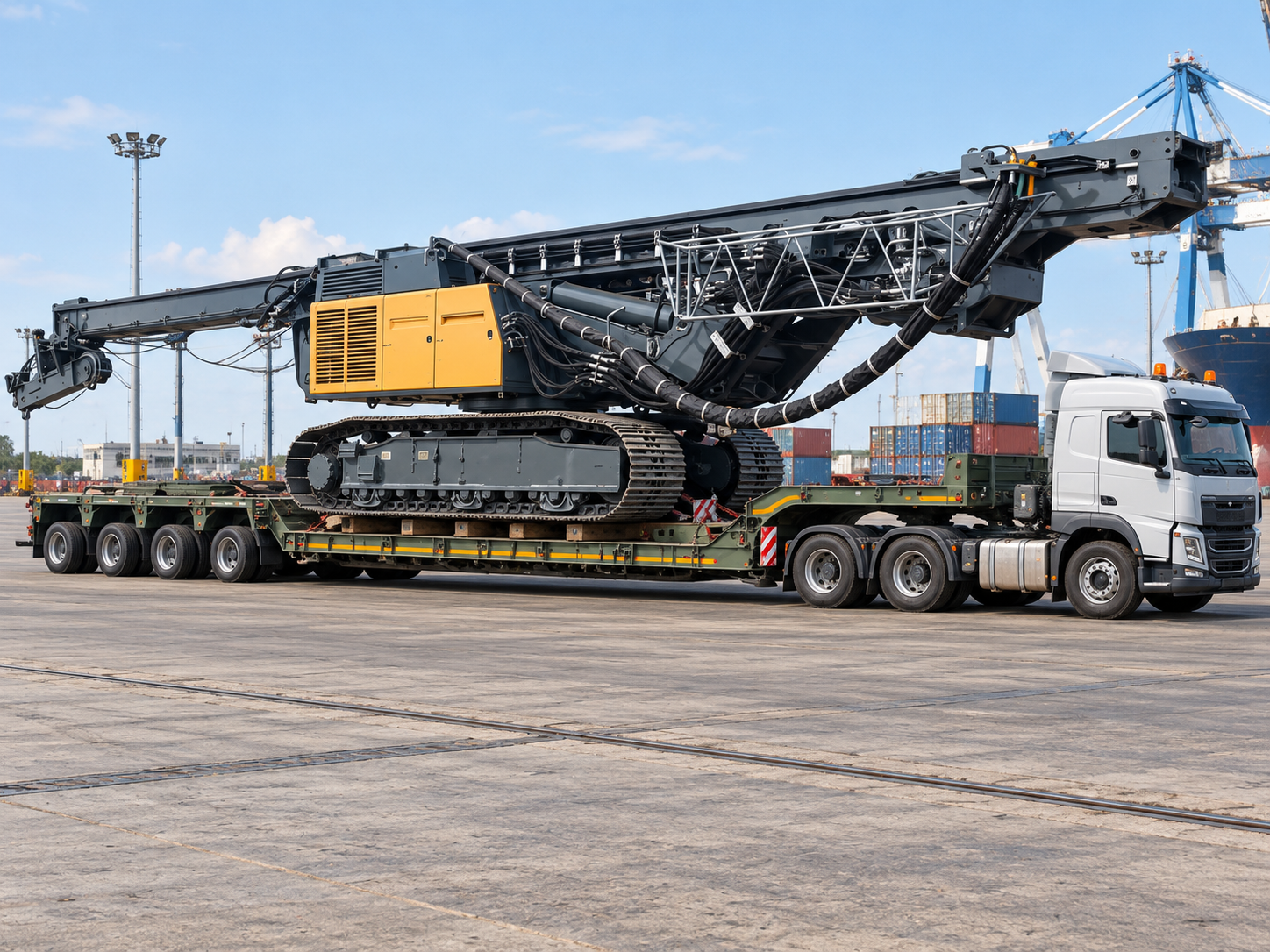
Drilling, crushing, lifting and process machinery with non-standard configurations.
The critical factor is not the machine's factory dimensions alone, but the final configuration after it is loaded onto the platform.
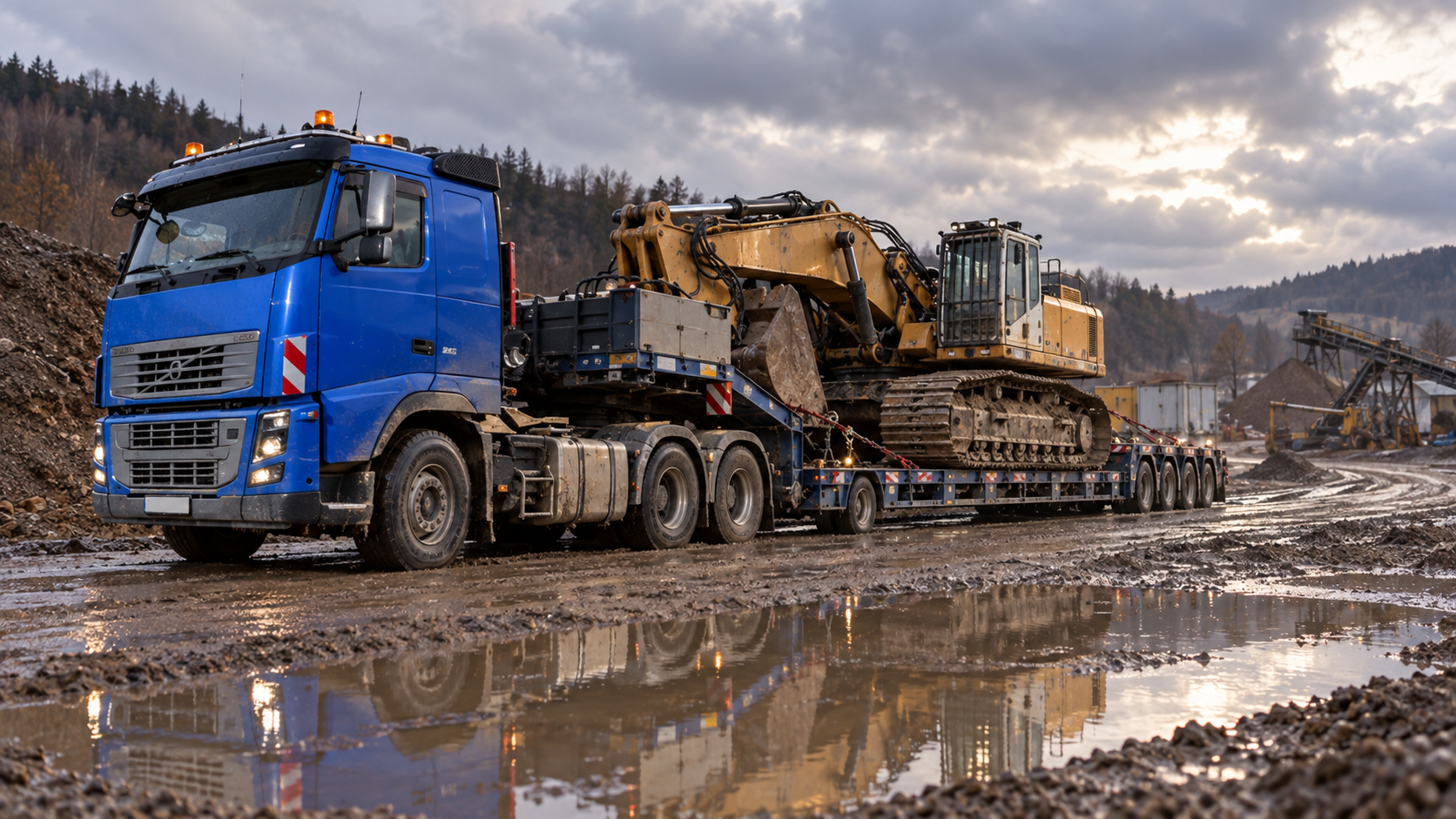
Platform height, usable deck length, number of axle lines and loading-ramp design are calculated for the specific machine.
The lower the cargo sits relative to the road, the more options there are for passing height restrictions.
We account for protruding elements, booms, buckets and attachments.
Especially important for machinery with low ground clearance and a long wheelbase.
Determined by cargo weight and the required load distribution.
The machine's centre of gravity determines its position on the platform. Cargo placement affects the load on each axle group of the tractor unit and trailer.
For machines with heavy undercarriages, counterweights or large attachments, weight distribution may be asymmetrical.
Minimum transport dimensions do not always require a more complex platform. Sometimes it is more practical to remove selected machine components and reduce the overall transport dimensions.
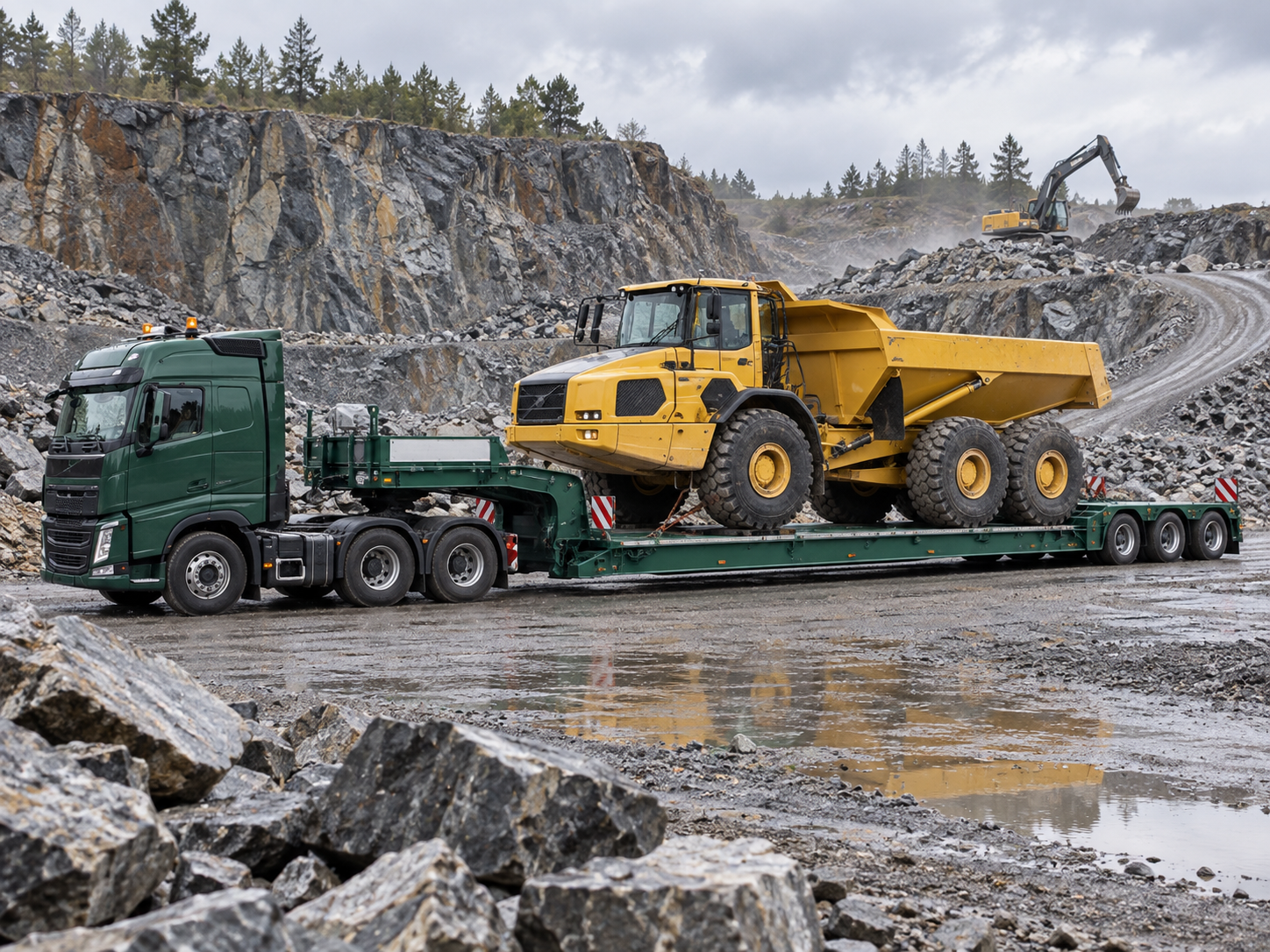
Once the platform is selected, we obtain the actual transport dimensions and use them to check the route.
Bridges, overpasses, overhead lines and other structures above the road.
Turning radii, intersections, access points and manoeuvres for a long vehicle combination.
Narrow sections, barriers and roadside infrastructure.
Load restrictions on bridges and road sections.
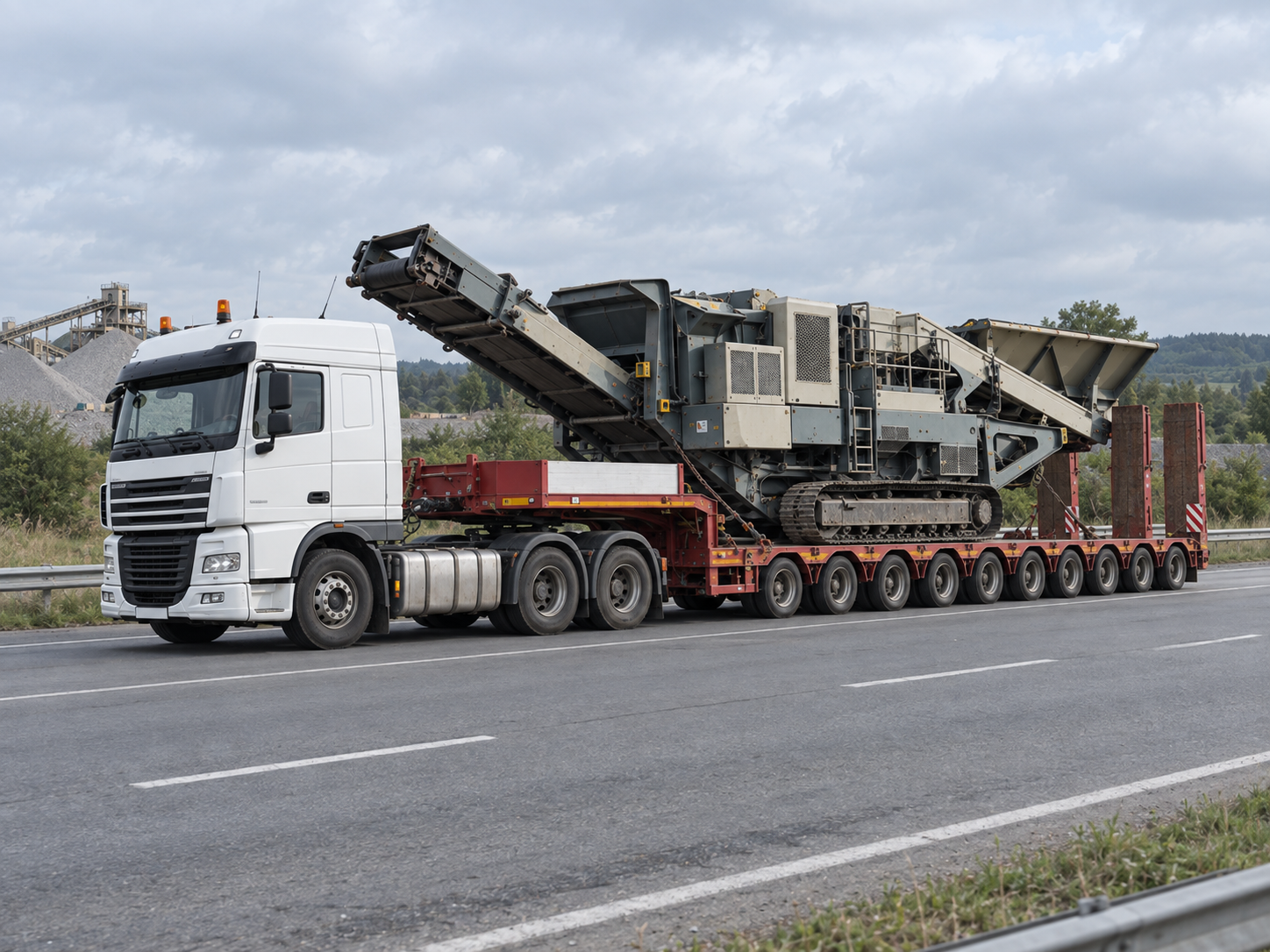
Construction and quarry machinery is often delivered directly to the site - a quarry, construction site, industrial area or temporary access road.
We therefore consider not only the main route, but also access through the final section, manoeuvring, unloading and vehicle exit.
Tracked, wheeled, quarry, crushing and special-purpose machinery each require their own transport solution.
A complete set of documentation is not required. The machine's basic specifications are enough for an initial assessment.
Send us the machine model, weight, dimensions and route. If some parameters are not yet known - we can start with the information available.
