01
Tractors
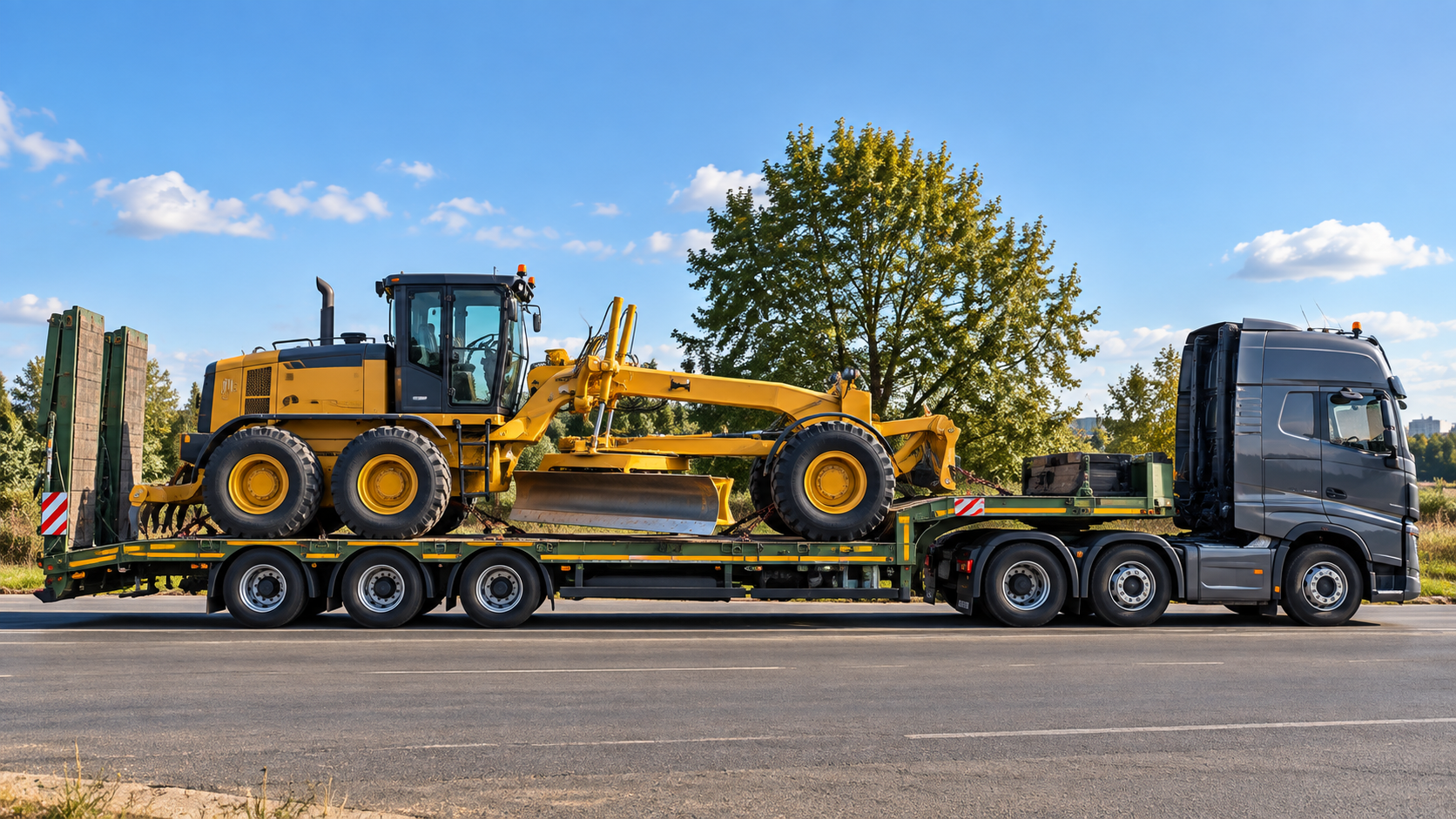
Wheeled and tracked tractors with consideration for overall wheel width and attachments.
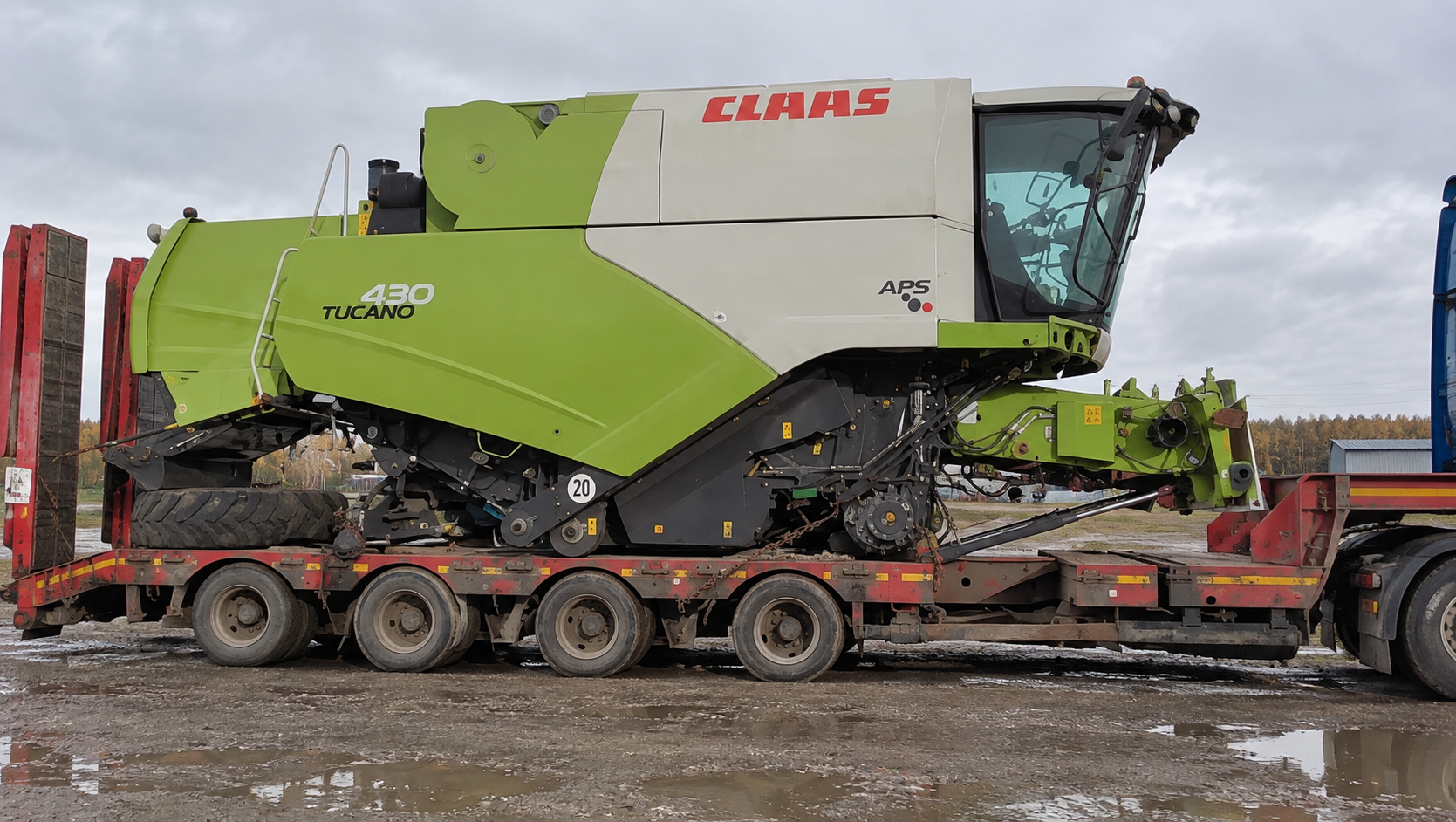
Combine harvesters, tractors, self-propelled sprayers, seeders, headers and other large agricultural machinery. We select the platform based on height, width, ground clearance, wheelbase and attachments.
For agricultural machinery, the transport configuration is determined by large wheels, cab, attachments, header, working sections and a long wheelbase.
Once loaded onto the platform, the overall height changes, and removing wheels or working modules can reduce the width and make the route technically passable.
Track width, ground clearance and attachments determine the loading method and transport position.
Wheeled and tracked tractors with consideration for overall wheel width and attachments.
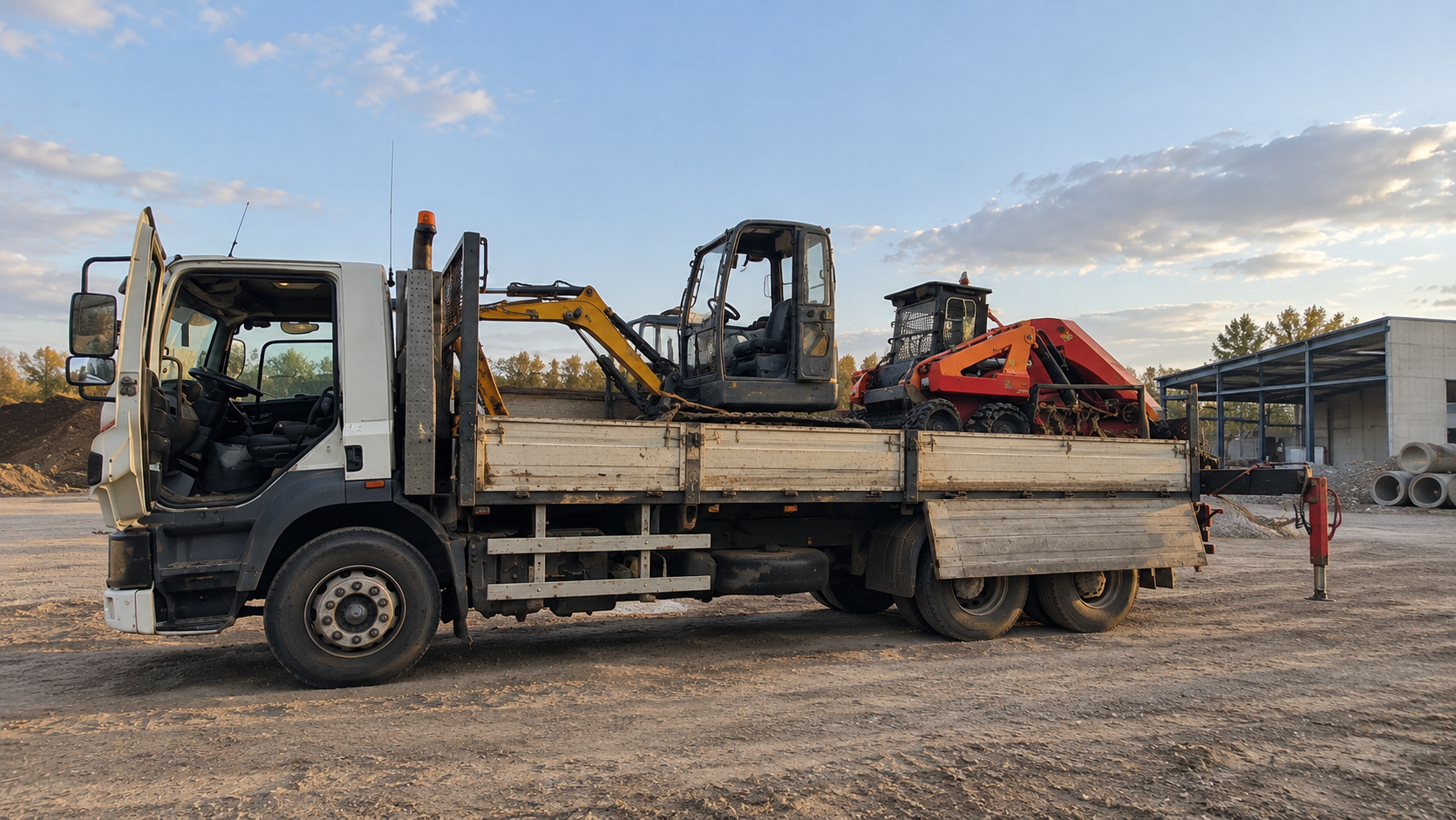
Tall self-propelled machines, where platform height and transport width are especially important.
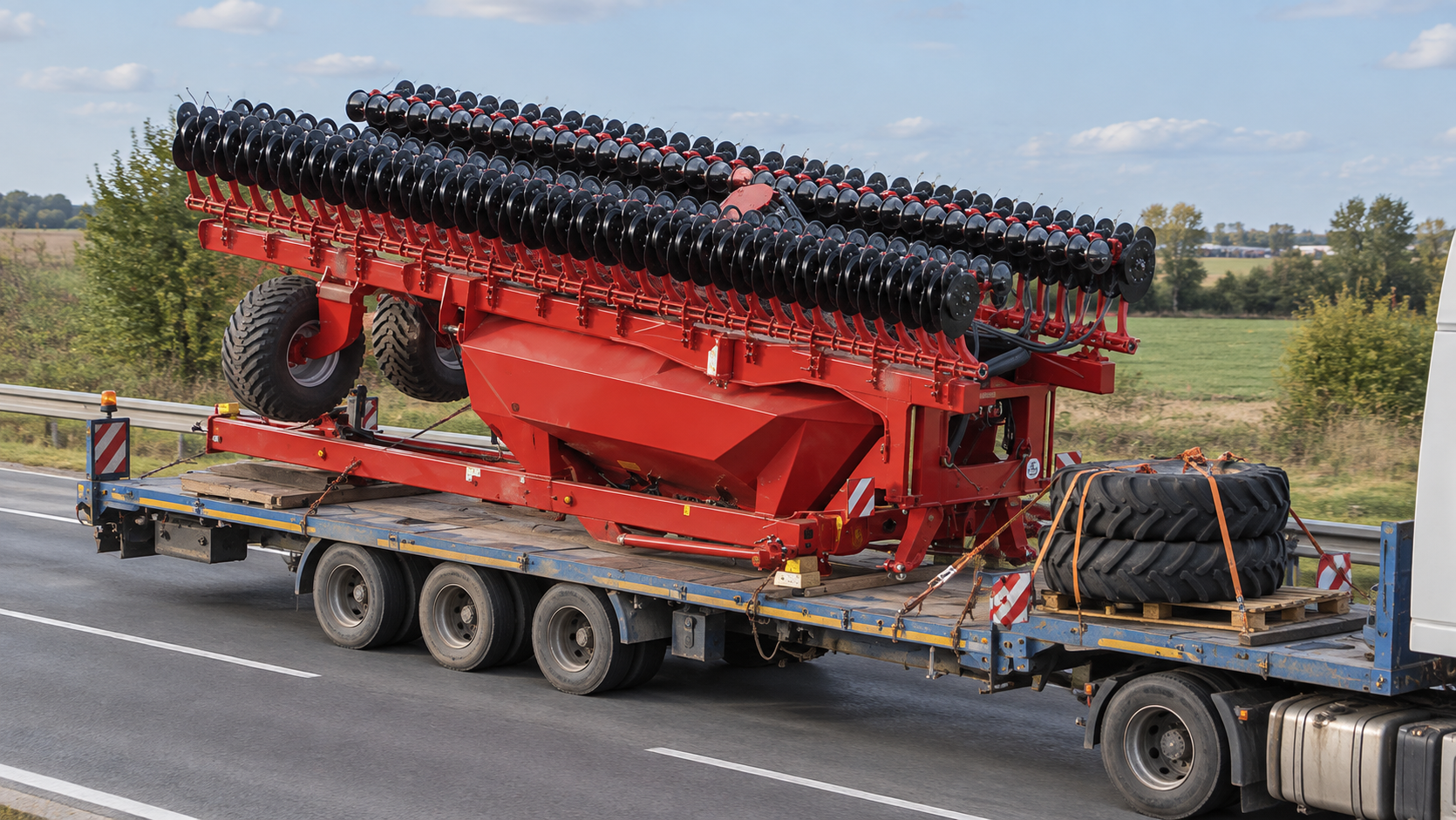
Folding and wide-span implements with non-standard geometry in transport position.
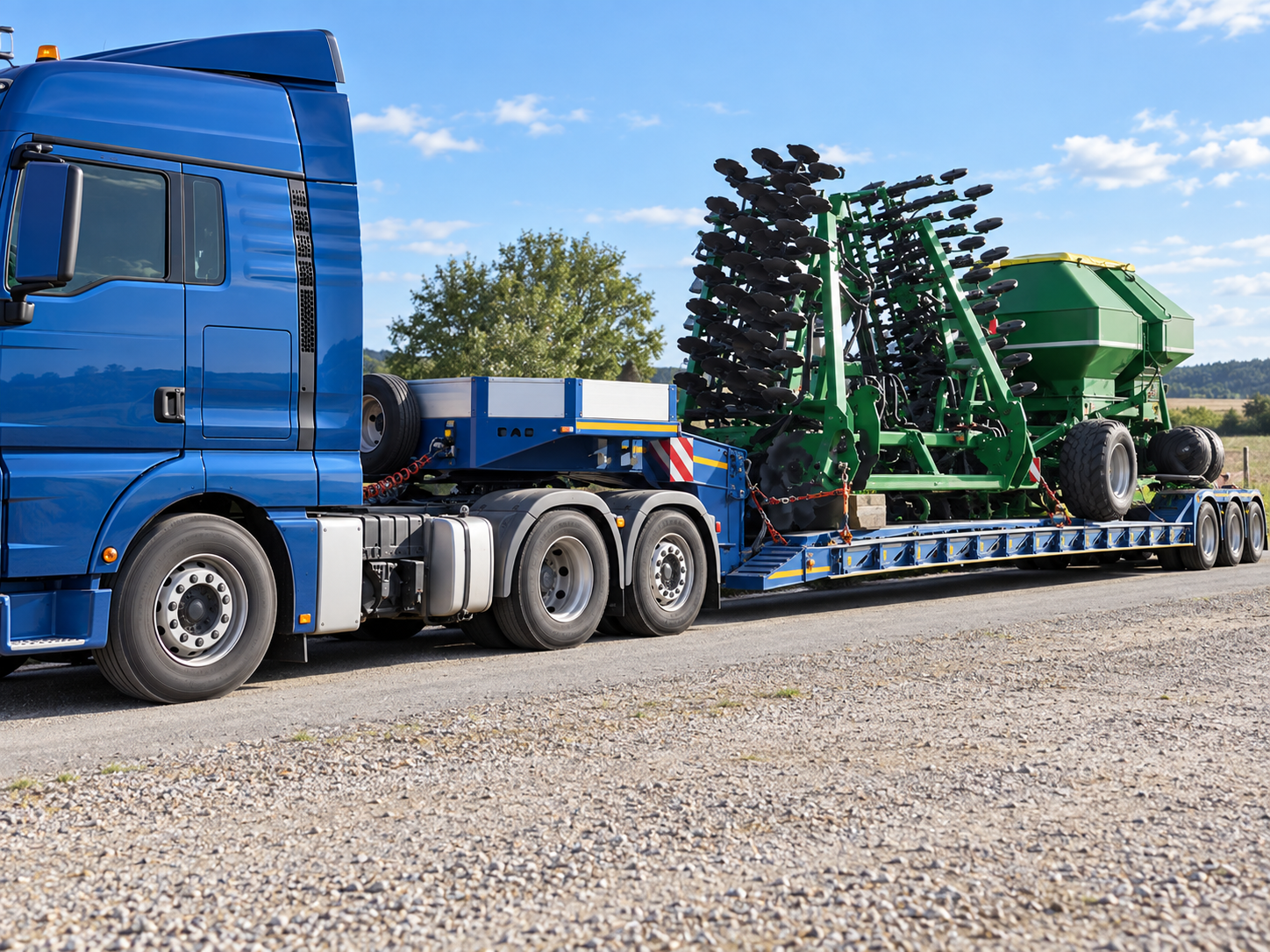
For large agricultural machinery, transport height often becomes the main route constraint. The platform is therefore selected first, then the overall dimensions of the vehicle combination are calculated.
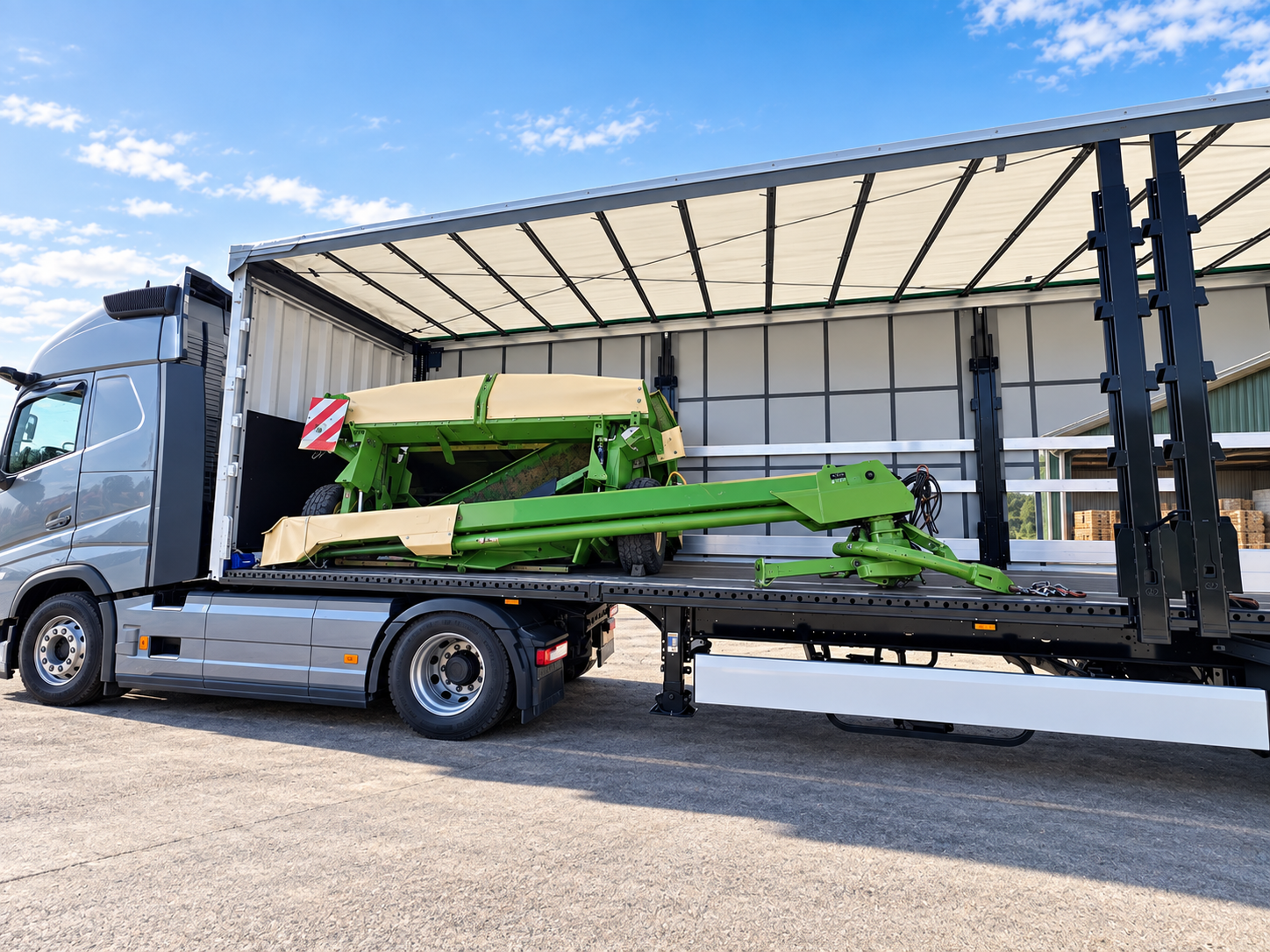
Agricultural machinery often has large wheels, a long wheelbase and limited ground clearance. The platform type and loading method are therefore determined before the route is approved.
The lower the platform, the lower the final transport height.
Checked against the machine wheelbase and minimum ground clearance.
Matched to the outer track width and wheel support points.
Machine position is selected with vehicle axle loads in mind.
Working implements, headers, individual wheels and other components may be transported separately if this reduces width, height or simplifies the route.
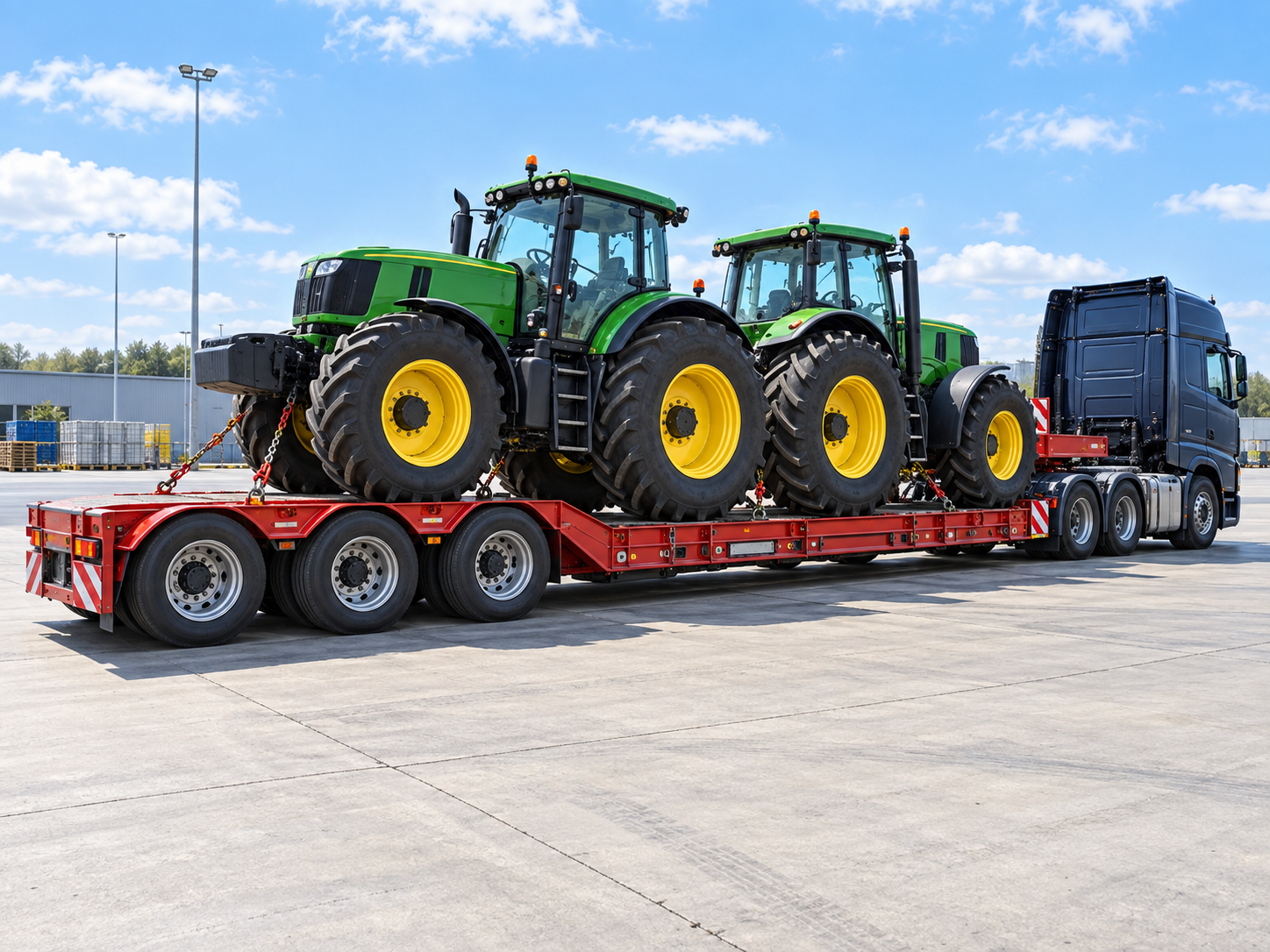
For large agricultural machinery, constraints often appear in the final kilometres: narrow rural roads, small bridges, trees, overhead wires, gates and insufficient space for turning.
Bridges, power lines and other infrastructure above the road.
Narrow roads, fences, trees and other lateral restrictions.
Manoeuvring of the long vehicle combination is checked.
Gates, unpaved roads, site area and the ability to drive off the lowbed.
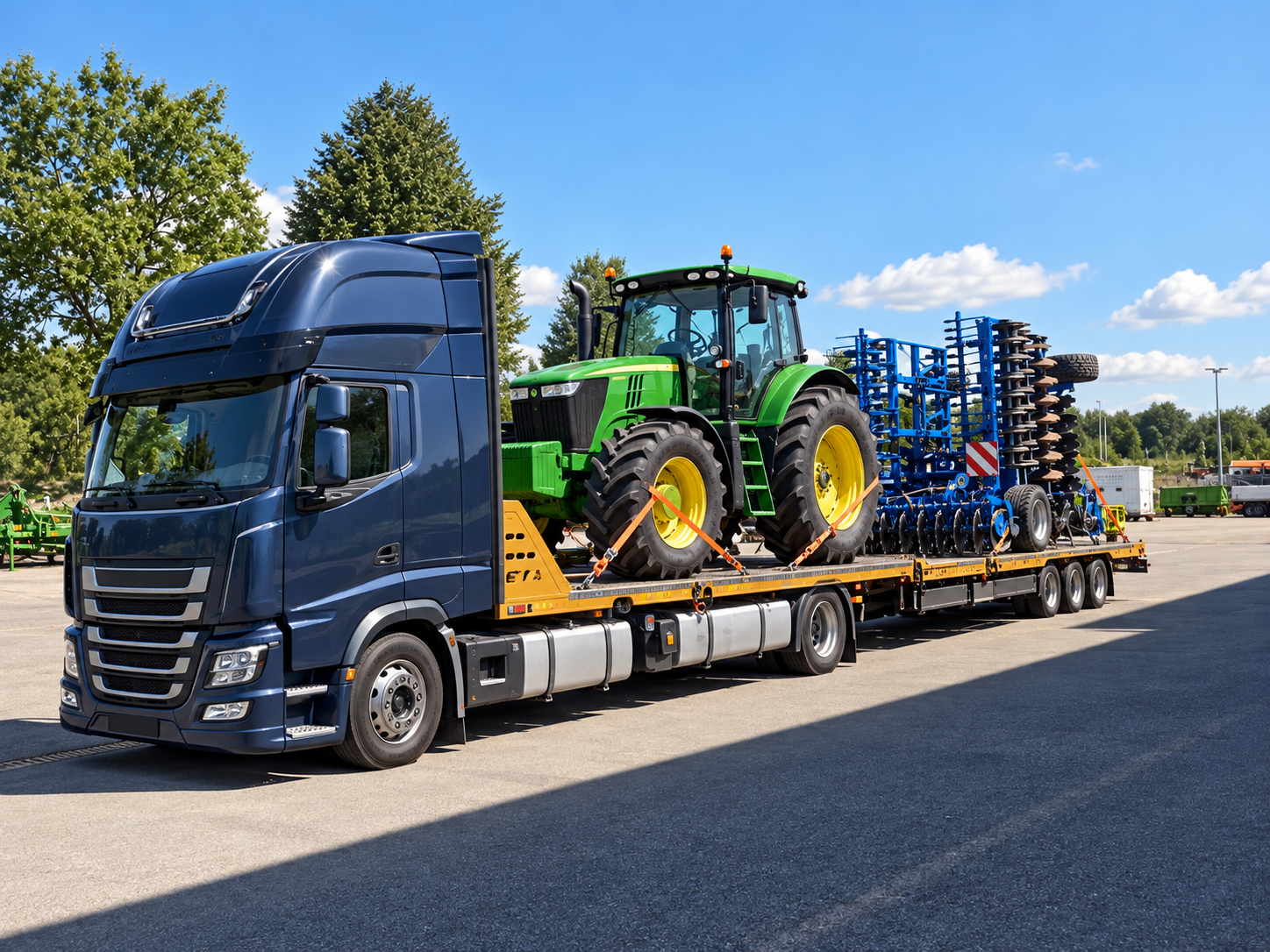
The final destination may not be an industrial site, but a farm property or a location next to a field.
We therefore check access in advance, including manoeuvring, safe unloading and vehicle exit.
Tractors, combine harvesters, seeders and attachments require different positioning methods on the transport platform.
For an initial assessment, the basic machinery parameters and route information are sufficient.
Send us the model, weight, dimensions, photos and route. If some data is not yet known, we can start with the information available.
